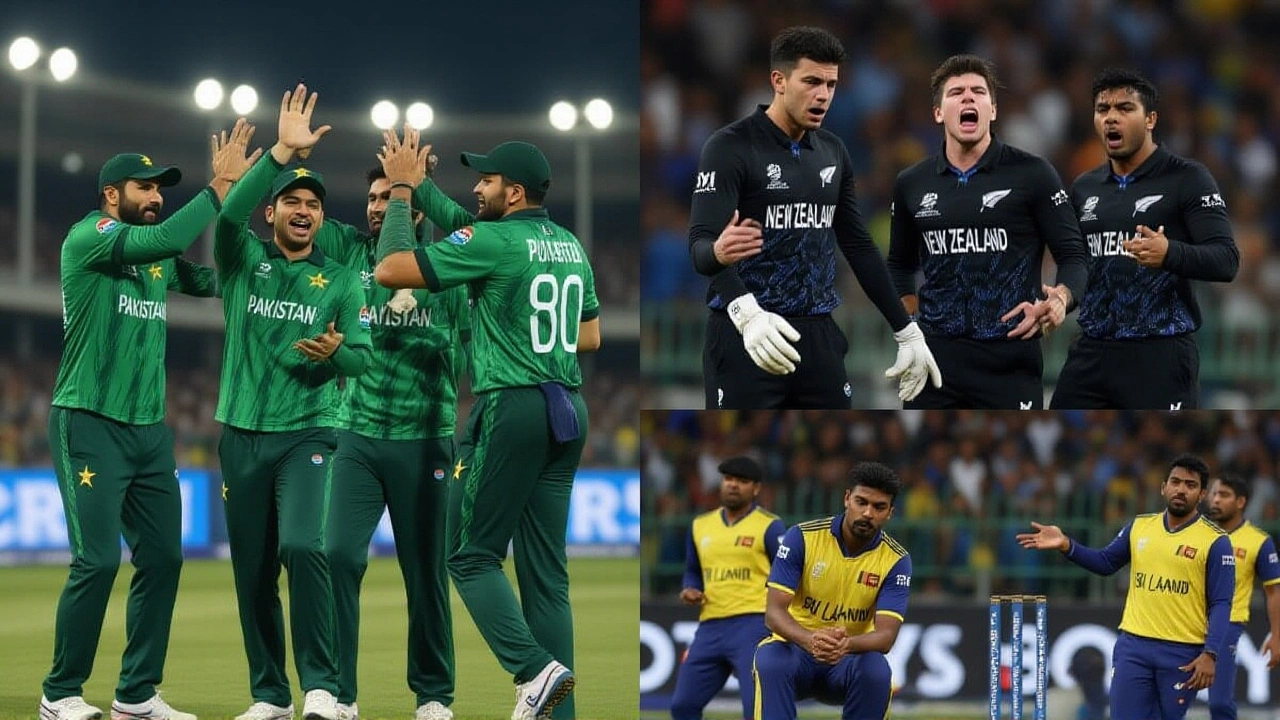
In a twist that defied logic and left fans stunned, Pakistan national cricket team won their Super-8 match against Sri Lanka cricket team by just five runs, yet found themselves eliminated from the ICC Men's T20 World Cup 2026Pallekele. The victory was hollow. While the scoreboard showed a win, the net run rate calculations meant New Zealand secured the semi-final spot instead. It’s the kind of scenario where winning feels like losing.
The match, played at the Pallekele International Cricket Stadium, was the tournament’s 50th game. For Pakistan, this wasn’t just another league fixture; it was a do-or-die situation. They needed a massive margin of victory—specifically, at least 65 runs—to keep their semi-final hopes alive. Instead, they managed only five. Here’s how a narrow win became a knockout blow.
A Thriller That Ended in Heartbreak
The atmosphere in Pallekele was electric, charged with the tension of a final-over finish. Sri Lanka chased hard, staying within reach until the very last ball. According to reports from Navbharat Times and ABP Live, the chase remained tight throughout. At one point, Sri Lanka sat on 120 for 5, looking vulnerable. But they fought back, reaching 167 for 6 before pushing further to 185 for 6 after 19 overs.
But wait—the drama peaked in the final over. Sri Lanka needed 28 runs to win off the last six balls. A near-impossible task, yet they kept hope alive. They scored 22 runs in that over, falling short by just five runs. Pakistan held their nerve, but the relief was short-lived. The players knew immediately: five runs weren’t enough. The math didn’t lie.
“This match was extremely important for Pakistan,” noted Navbharat Times. “Despite winning, they couldn’t secure the required margin.” The irony is palpable. You can win the battle but lose the war if the stakes are calculated differently.
Key Performances and Turning Points
On the field, individual brilliance shone through amidst the chaos. For Sri Lanka, Dilshan Madushanka was the standout bowler, claiming three wickets to disrupt Pakistan’s innings. His spell kept the pressure on, ensuring Pakistan couldn’t build the massive total they desperately needed.
For Pakistan, Babar Azam and Salman Agha were central figures in the batting lineup, while Dasun Shanaka led Sri Lanka’s charge. Yet, none could alter the arithmetic reality waiting for them. Babar Azam’s leadership was tested, but even his best efforts couldn’t bridge the 60-run gap between the actual margin (5 runs) and the required margin (65 runs).
The details are still unclear regarding specific boundaries or key dismissals in the middle overs, but the overall narrative is clear: Pakistan batted well enough to win, but not well enough to qualify.
New Zealand’s Semi-Final Berth
While Pakistan celebrated a pyrrhic victory, New Zealand breathed a sigh of relief. Their semi-final qualification was contingent on Pakistan failing to achieve the large-margin win. As ABP Live reported, “With this result, New Zealand has entered the semi-finals.”
This outcome highlights the brutal nature of group-stage tournaments. One match’s margin can determine another team’s fate. New Zealand didn’t play a single ball in this contest, yet they reaped the rewards of Pakistan’s insufficient victory. It’s a harsh lesson in tournament dynamics.

What This Means for the Tournament
The elimination of Pakistan sends shockwaves through the cricketing world. Known for their explosive potential, Pakistan’s early exit leaves a vacuum in the competition. Fans are left questioning the format’s fairness. Is it right that a team wins a match but gets knocked out? The debate will rage on social media and sports desks alike.
For Sri Lanka, the loss stings, but they can take pride in keeping the game close until the end. They pushed Pakistan to the brink, forcing a final-over decider. In contrast, Pakistan’s campaign ends in frustration. They had the skill, the talent, and the will—but not the margin.
Looking ahead, the semi-finals will feature New Zealand alongside other qualifiers. The stage is set for high-stakes clashes. Meanwhile, Pakistan must regroup and reflect. What went wrong? How could they have planned better for net run rate scenarios? These questions will dominate post-mortems in Lahore and Karachi.
Historical Context and Future Implications
This isn’t the first time cricket has seen such twists. Remember the 2019 World Cup? Or the chaotic group stages of earlier T20 World Cups? Net run rate has always been a double-edged sword. It rewards dominance but punishes narrow wins in critical matches.
Experts suggest that teams need to adjust their strategies in Super-8 stages. Winning isn’t enough; you need to win big. This means aggressive batting, disciplined bowling, and smart field placements—all aimed at maximizing run margins. Pakistan’s failure to execute this strategy cost them dearly.
As the tournament moves forward, eyes turn to the remaining contenders. Will New Zealand capitalize on their luck? Can other dark horses rise? The answers lie in the next few days. For now, Pakistan’s dream is over, ended not by defeat, but by a victory that wasn’t quite good enough.
Frequently Asked Questions
Why did Pakistan get eliminated despite winning?
Pakistan needed to win by at least 65 runs to improve their net run rate sufficiently for semi-final qualification. They only won by 5 runs, which was insufficient to overtake their rivals in the standings, leading to their elimination.
Who qualified for the semi-finals instead of Pakistan?
New Zealand secured the semi-final berth. Their qualification depended on Pakistan failing to achieve the large-margin victory required, making Pakistan’s narrow win directly beneficial to New Zealand’s campaign.
Where was the match played?
The match took place at the Pallekele International Cricket Stadium in Pallekele, Sri Lanka. It was the 50th match of the ICC Men's T20 World Cup 2026 Super-8 stage.
Who was the top performer for Sri Lanka?
Dilshan Madushanka was the leading bowler for Sri Lanka, taking 3 wickets. His performance helped keep Pakistan’s score manageable, preventing them from achieving the large margin needed.
How many runs did Sri Lanka need in the final over?
Sri Lanka needed 28 runs in the final over to win the match. They managed to score 22 runs, falling short by 5 runs and resulting in Pakistan’s victory.